2026 Mid-Atlantic Sea Grant Regional Meeting
Session Descriptions
Session descriptions are still being added. Check back often for updated descriptions, times, and locations.
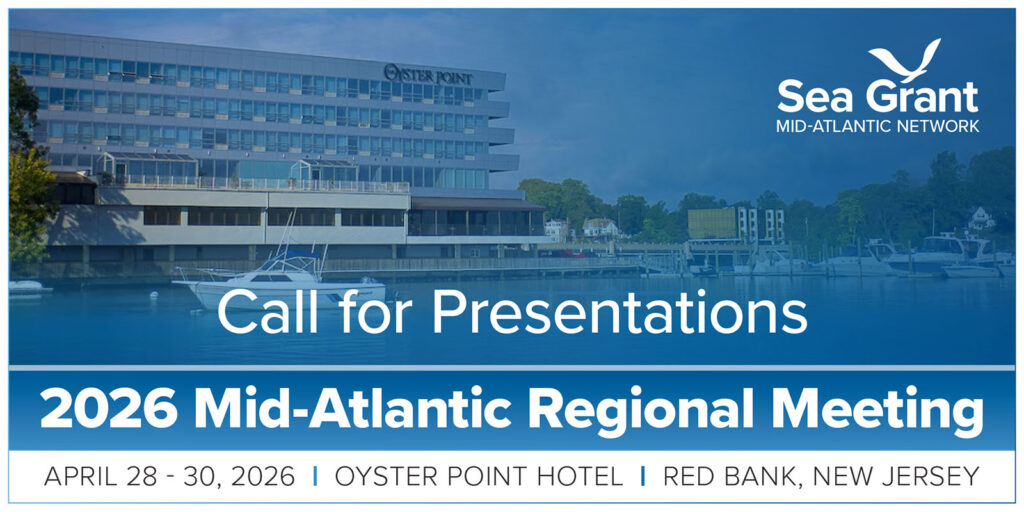
Deadline Extended: Please complete the submission form by Friday, February 27th at 5:00pm Eastern Time
Coming Soon!
Tuesday, April 28 - KEYNOTE ADDRESS
Nick Angarone, New Jersey Chief Resilience Officer, New Jersey Department of Environmental Protection
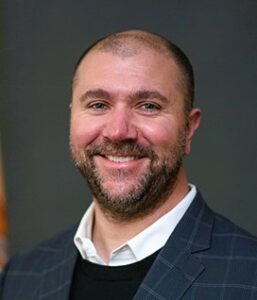
As New Jersey’s Chief Resilience Officer, Nick coordinates statewide policy on climate resilience and serves as Vice-Chair of the Interagency Council on Climate Resilience. In that capacity, he leads and directs the development and implementation of the Statewide Climate Change Resilience Strategy, and provides education, training, planning, and technical assistance to local governments in their efforts to address the impacts of climate change.
Nick also manages the Office of Climate Resilience at the NJ Department of Environmental Protection (DEP) where he oversees the Bureau of Climate Resilience Planning, the Blue Acres buyout program, and Resilient NJ, the state’s climate resilience planning program. He serves as New Jersey’s Coastal Manager and administers the New Jersey Coastal Management Program in cooperation with NOAA and a network of programs across DEP, and represents DEP on the State Planning Commission, ensuring that climate resilience, natural resource protection, and infrastructure capacity are incorporated into the planning process.
Nick holds a master’s degree in city and regional planning from the Bloustein School of Planning & Public Policy and a bachelor’s degree in environmental planning and design from Rutgers University (Cook College). He is a member of AICP and is a New Jersey Professional Planner.
Tuesday, April 28 - Session Schedule
Concurrent Session A - Advancing Regional Fisheries and Aquaculture
4:00pm - 5:00pm
Coral Room
Advancing Regional Fisheries and Aquaculture
Facilitator: Ed Hale, Delaware Sea Grant
This unique session combines multiple aquaculture and seafood presentations, representing projects from across the region, regardless of size, scale and stage. Projects and presenters include:
- Lessons Learned from Collaborations Between Sea Grant Extension and Federal Partners. Cally Carmello, Maryland Sea Grant
- Seafood Economic Analysis and Marketing Research (SEAMaR) Program: Stakeholder-Driven Applied Research and Extension for U.S. Aquaculture. Charles Clark, Virginia Sea Grant
- Modernizing Mid-Atlantic Seafood through Integrated, Sustainable, and Intelligent Processing. Yiming Feng, Virginia Sea Grant
- Seafood Safety and Quality Program at X Seafood Agricultural Research and Extension Center (VSAREC). Mengyi Dong, Virginia Sea Grant
- Aquaculture is Agriculture; aquaculture in the agriculture science education classroom. Adam Frederick, Maryland Sea Grant
- Building New Jersey’s Next Generation of Aquaculture Professionals. Diana Burich, New Jersey Sea Grant
- Aquaculture Production and Educational Updates for Delaware. Ed Hale, Delaware Sea Grant
Concurrent Session B - Creating and Leading Durable Networks
4:00pm - 5:00pm
Bimini Room
Serving with IMPACT: Effective Strategies for Non-profit Board Participation
Presenter: Ed Lewandowski, Delaware Sea Grant
This session equips new and experienced board members with practical, mission‑focused strategies to strengthen their governance effectiveness. Drawing from the IMPACT framework—Intentional Governance, Meeting Mastery, Prepare & Participate, Accountability & Alignment, Culture/Community/Communication, and Time/Treasure/Talent—participants will explore what high‑performing boards do differently and how individual members can elevate their contributions. The session clarifies core fiduciary duties, the critical boundary between governance and management, and habits that lead to productive meetings and strategic decision-making. Real-world scenarios illustrate both effective and ineffective board behaviors, emphasizing preparation, financial literacy, ethical conduct, and collaborative culture. Attendees will leave with actionable practices to enhance board dynamics, support executive leadership appropriately, and serve as persuasive ambassadors for their organization’s mission. Whether you are joining your first board or seeking to sharpen your impact, this session provides the tools to serve with confidence, clarity, and purpose.
Coordination For Collaborative Networks
Presenter: Taryn Sudol, Maryland Sea Grant
Collaborative networks (i.e. multiple partners across a geographic area) are often employed to help reach environmental goals in a region, yet the coordinators of those networks vary in their background, expertise, and training. What skills sets are most utilized, what roles do coordinators play in networks functioning, and what support would improve coordinator outcomes? In August 2024, Maryland Sea Grant hosted a workshop to strengthen coordinators’ ability to effectively engage members and stakeholders and to advance a group’s resilience goals. In this session, we will share our findings and further explore as a group how best to support coordinators and provide the necessary resources for them to enact and maintain their responsibilities.
Powering Programs at Scale: How Networks Built Delaware Sea Grant’s SAV Monitoring and Restoration and Marine Debris Programs
Presenter: Brittany Haywood, Delaware Sea Grant
Effective coastal conservation at scale, and the long-term health of coastal ecosystems, require more than individual projects; it requires programs built on durable, people-centered networks. This presentation highlights how two complementary Delaware efforts, the Delaware Statewide Submerged Aquatic Vegetation Workgroup (DeSSAV) and a marine debris program focused on derelict crab pot removal (Trap Trackers), were built through intentional partnership development, coordination across agencies and communities, and shared tools that support applied science, outreach, and on-the-ground action.
Both programs were built by connecting researchers, managers, recreational fishers, volunteers, nonprofits, and funders into shared networks. These partnerships enabled each effort to gain traction by pooling expertise, securing funding, standardizing data, and coordinating people across disciplines. Comparing a statewide SAV monitoring and restoration program with a targeted derelict crab pot removal effort reveals common approaches to program design, coordination, and long-term sustainability; and demonstrates how strong networks turn individual projects into durable conservation programs.
TOOLS CAFE
5:00pm - 6:00pm
Ballroom A
Using Digital Tools for Watershed Education Across Multiple States
Presenter: Michelle Niedermeier, Pennsylvania Sea Grant
Sea Grant Educators have partnered across states to create free, short, engaging online learning modules centered on watershed topics. This session will share the design and delivery strategies that allow for a user-friendly and participant-driven virtual professional learning opportunity. The digital format utilizes Google Classroom, Sites, and Forms, along with ArcGIS Survey123 and Autocrat, and is accessible at any time and at the participant’s own pace. The content of each module includes scientists and experts who introduce the topic and their related career. Participants gain access to exemplary resources and learning materials for both educators’ and learners’ use, connections to partners for deeper dives into the topic, and examples of environmental action projects. The modules engage participants in environmental literacy and workforce development opportunities.
Research Briefs: A Practical Tool for Translating Science with Purpose
Presenter: Annalise Kenney, Ashley Goetz, Jill Gallagher, Maryland Sea Grant
Sea Grant programs generate actionable research, but key findings often fall short of reaching the policymakers, practitioners, and communities who need them most. This Tools Café session spotlights research briefs: a practical, adaptable communication tool developed by Maryland Sea Grant to bridge that gap. Designed for specific non-research audiences, research briefs are concise, clearly written, and visually engaging publications co-created by researchers, extension specialists, and communicators. Using our 2025 research brief on the effects of oyster aquaculture on submerged aquatic vegetation (SAV) in Maryland as a case study, we will walk participants through the development process, from identifying audience needs to translating peer-reviewed science into clear language and designing the factsheet.
Characterizing Shoreline Management Perceptions Using Q-Methodology
Presenter: Michael Wade, Maryland Sea Grant
Q-methodology is a social research method that produces statistically significant quantitative and qualitative data. Findings generated through Q-methodology provide historical and social context otherwise lost through traditional surveys. Q-methodology is conducted via a unique procedure where carefully selected participants sort a series of statements, encompassing all perspectives of a given topic, based on how much they agree or disagree with them. These sortings are analyzed simultaneously to draw statistically significant themes. We used Q-methodology to compare the intersecting perspectives of coastal residents and shoreline management professionals, in order to inform shoreline management in Maryland. Come learn from our project, and how Q-methodology can be utilized in your communities!
Bridge Ocean Education Resource Center: What’s New & What’s Next!
Presenter: Celia Cackowski, Virginia Sea Grant
The Bridge Ocean Education Resource Center is entering an exciting new chapter! Stop by our table to preview our fully redesigned website built to better serve today’s marine educators. We will also offer a sneak preview of the Ocean Education Exchange—an interactive online platform designed to connect educators and researchers in meaningful collaboration and resource sharing. Discover how these initiatives will support ocean literacy and strengthen the marine education community. Join us to explore what’s new and help shape what comes next!
Getting Connected: Growing Media Presence from the Ground Up
Presenter: Grace Duregger, Virginia Sea Grant
Getting Connected will be all about building a communications program for a science/research-based organization. This interactive exhibit will feature helpful tips on how to start a communications program, how to grow it out, and how to communicate science to the general public and community members. The key message of this exhibit will be to show communicators/participants that building a communications program is easier than you think; and by the end of the session they will have helpful tips and tricks to increase reach and awareness of their research and work.
Wednesday, April 29 - Session Schedule
Cross-Cutting Skills Session - Responding to Change: Energy Transitions and Crisis Preparedness
9:00am - 10:15am
BALLROOM B
Presenters: Rebecca Jones, North Carolina Sea Grant; Annalise Kenney, Maryland Sea Grant; Kayla Walsh, New York Sea Grant; Kathryn Lienhard, Delaware Sea Grant
This session will open with an outline of communication issues related to risk, crisis, and misinformation as they play out in Sea Grant programs. Following, we’ll use wind energy as a case study for imagining ways that our programs can prepare to meet these communication challenges within the parameters of our mission. The end of the session will ask participants to discuss potential solutions and how they might meet our needs as we attempt to respond to both unique and shared challenges to our work. We hope this session will generate ideas for collaboration on emerging and recurring issues requiring careful, coordinated communication at the individual program and Mid-Atlantic regional scales.
Concurrent Session A: Workforce and Capacity-Building for Resilient Communities
10:30am - Noon
Coral ROom
Advancing the Green Infrastructure Workforce in the Mid-Atlantic
Presenter: Amanda Rockler, Maryland Sea Grant
As demand for green infrastructure continues to grow across the Mid-Atlantic, so does the need for a trained workforce prepared to enter and advance within the stormwater and landscape industry. The Chesapeake Bay Landscape Professional – Associate (CBLP-A) program was developed specifically as a workforce development initiative to build foundational skills and career pathways into the field. CBLP-A is designed for individuals entering the workforce. The program targets community college students, high school career and technical education programs, new industry entrants, and reentry populations seeking employment in the green infrastructure sector.
This presentation will highlight the collaborative, multi-state effort behind CBLP-A, including partnerships among Sea Grant, Extension, state agencies, educators, and industry leaders. We will share program design, early implementation lessons, and strategies for expanding inclusive workforce pipelines. Participants will gain insight into how Sea Grant partnerships can support workforce development, strengthen green infrastructure performance, and build the next generation of climate-resilient practitioners.
From Learning to Action: How Green Infrastructure Champions Turned Community Education into On-the-Ground Solutions
Presenter: Chris Obropta, New Jersey Sea Grant
Green infrastructure is an effective, cost-efficient way to manage stormwater, improve water quality, and strengthen community resilience to changing weather. However, successful implementation often relies on local capacity, collaboration, and community engagement. This presentation features a community-driven case study with a Green Infrastructure (GI) Champion, Faith Teitelbaum, from the Whale Pond Brook Association and a Long Branch native.
The GI Champions Program was launched by Rutgers Cooperative Extension’s (RCE) Water Resources Program in 2019. The program trains local leaders, municipal staff, and community members to plan, implement, and maintain green infrastructure solutions. The presentation emphasizes collaboration through peer-to-peer learning and knowledge sharing.
Watershed Stewards Academy: Past, Present, and Future – Building a Data-Informed Path Forward
Presenters: Amanda Rockler, Michael Wade, Eric Buehl, Claire Cambardella, Emily Thorpe, Maryland Sea Grant
For over ten years, the Watershed Stewards Academy (WSA) has built community leadership in stormwater management, green infrastructure, and watershed restoration. Through sustained collaboration among Extension, Sea Grant, local governments, and nonprofit partners, the Academy has prepared hundreds of volunteer stewards to design and implement restoration projects, lead outreach initiatives, and expand local watershed capacity.
This session will provide a collaborative look at the Academy’s trajectory and how a data-driven planning process is shaping its next phase. Our team is currently undertaking a comprehensive program evaluation to better understand long-term impacts, participant experiences, and alignment with partner goals. Insights from this work are guiding recommendations to modernize curriculum delivery, strengthen stewardship pathways after graduation, and improve long-term volunteer engagement and retention. Participants will leave with practical approaches for evaluating established environmental leadership programs and translating assessment findings into strategic program improvements.
Concurrent Session B: Working in the Coastal Urban Environment
10:30am - Noon
Bimini Room
Between the Tides: Sea Grant’s Work in Urban Spaces Around the Mid-Atlantic
Presenters: Jonathan van Senten, Virginia Sea Grant; Michelle Niedermeier and Zach Nemec, Pennsylvania Sea Grant; Diana Burich, New Jersey Sea Grant, Hannah Eisler Burnett and Catherine Prunella, New York Sea Grant; Emily Maung-Douglass, Delaware Sea Grant
Coastal urban environments are densely populated areas, abundant with opportunities for Sea Grant to be part of innovative solutions, approaches, and partnerships to coastal issues. There is much to be learned from working in urban areas, including the wealth of opportunities, challenges encountered and strategies used to work through them, partnerships built and leveraged, the wide range of communities and user-groups, and lessons learned and best practices.
Join us for this interactive, gallery-style session featuring discussion, visuals, and insights into the many ways in which Sea Grant works in the mid-Atlantic region’s urban spaces. Topics covered include but are not limited to: coastal resilience, water quality impairments, flooding, green infrastructure, sustainability, adaptations to changing weather and environmental conditions, marine debris, education, and seafood.
Field Experiences
2:00pm-5:45pm - Dinner on Your Own
Departure Location: Hotel Lobby
The Town of Sea Bright After Hurricane Sandy
The town of Sea Bright was nearly wiped out in Hurricane Sandy. Sea Bright is located on the barrier peninsula that separates the Atlantic Ocean from the Navesink and Shrewsbury rivers. During Super Storm Sandy, water poured in from the backside leaving several feet of sand on the main street, with water levels reaching rooftops. Led by local municipal officials, this walking tour will explore various resilience efforts used to restore the community, continuing actions, and funding for the efforts. Participants should be prepared to be outdoors for a good portion of this field experience (e.g., appropriate outer and footwear, sunscreen, water bottle).
Highlands Clam Depuration Plant and NOAA’s Northeast Fisheries Science Center at Sandy Hook
This experience will take place at the James T. White Shellfish Depuration Plant of Highlands and the Northeast Fisheries Science Center lab at Sandy Hook. At the Northeast Fisheries Lab we will tour and meet with researchers and staff working on lobsters and ocean acidification, acoustic ecology, marine chemistry, and federal guidance on fish habitats. Participants will have opportunities to discuss their fisheries and aquaculture work, challenges, priorities, and potential collaboration. Located within Gateway National Recreation Area at Sandy Hook, the lab provides a unique setting to explore fisheries research, while the nearby Clam Depuration Plant will provides insight into the local commercial shellfish industry.
Keansburg Floodgate Site
Join municipal officials and the New Jersey Department of Environmental Protection for a guided tour of the Keansburg Floodgate Site. Beginning with a short walk along the beach (approximately 0.5 miles), participants will learn about the history of the floodgates, beach dredging efforts, and the site’s role in protecting the community since the 1950s, including during Super Storm Sandy. The tour will also include a discussion of ongoing coordination with the U.S. Army Corps of Engineers and, if access allows, an opportunity to view a demonstration of the gates. Participants should be prepared to be outdoors for a good portion of this field experience (e.g., appropriate outer and footwear, sunscreen, water bottle).
Level Up Learning: Using Games to Teach Marine and Coastal Science
Hotel activities for those not attending the off-field experiences trips (see schedule, above.)
2:00pm-4:30pm
Bimini Room
How to Gamify Your Science Programs Using Escape Rooms (2:00pm – 3:00pm)
Presenter: Mindy Voss and Diana Burich, New Jersey Sea Grant
Escape Rooms are a popular, fun, and engaging activity for all ages that help people use problem-solving skills, think outside the box, and work together. Learn how to turn your learning activities into an escape room to foster learning for students of all abilities, while educating them through science concepts by solving intriguing scavenger-hunt-type puzzles. With this immersive, fun, and effective process, students will also build cognitive skills and develop teamwork.
A physical Escape Room addressing Human Impacts will be set up for participants to experience and solve for themselves. Participants will be divided into small groups to work as a team, building on each solved clue until they achieve the final solution. Presenters will explain in detail how to create an Escape Room challenge for any topic using simple techniques and materials.
Big Games for Big Issues: Marine Debris (3:30pm – 4:30pm)
Presenter: David Christopher, Delaware Sea Grant
Marine debris is a complex issue, and as a result many people do not have a good understanding of the pathways, consequences, or solutions. To address this issue, Delaware Sea Grant is developing human-sized games to educate school students and the public about Marine Debris.
This session provides insights on two recent projects Delaware Sea Grant developed. The first project is an activity that highlights data from Delaware Sea Grant’s annual derelict crab pot round up. Participants move through a model crab pot that simulates the causes and consequences of derelict fishing gear. The second activity is a human-sized game board where people follow the various pathways of marine debris. Join us for this session to learn the rationale behind each activity as well as the creation, testing and dissemination plan for the activities. Participants will have the opportunity to play one of the games, if time and space allow!
Thursday, April 30 - Session Schedule
Concurrent Session A: Place-Based Approaches for Adaptation Planning
9:00am - 10:00am
Coral ROom
Place-Based Approaches for Adaptation Planning
Presenter: Kayle Krieg, Maryland Sea Grant
Place-based approaches for Adaptation Planning is an interactive session for anyone engaged in coastal resilience, fisheries, aquaculture or marine education who want to strengthen how they incorporate community knowledge into their work. Through a short framing and facilitated discussion, participants will explore how place-based approaches can move beyond storytelling to meaningfully shape decisions, partnerships and outcomes. Together we will examine common pitfalls, like tokenizing community voices or romanticizing heritage, and reflect on practical ways to shift toward more collaborative, effective and just practice. Participants will leave with concrete tools and questions to apply to their own programs.
Concurrent Session B:
9:00am - 10:00am
Bimini Room
Sea the Numbers: A Budget Refresher
Presenter: Lori Hans, Delaware Sea Grant
Let’s get fiscal! This session will be an introduction to budgeting, focusing on common budget line item definitions, as well as explanations of trickier ones like subawards and match. It can be a great refresher for those who haven’t flexed their fiscal muscles in a while, as well as a 101 introduction for anyone new to preparing budgets. If the time allows, we’ll practice creating a budget and/or open up for questions and share best fiscal-ness practices.
LIGHTNING TALKS - Collaboration Highlights
10:15am - 11:30am
Ballroom B
Engaging Anglers Through Community-Based Social Marketing to Prevent the Spread of the Invasive Round Goby
Presenter: Sara Stahlman, Pennsylvania Sea Grant
Preventing the spread of aquatic invasive species (AIS) depends heavily on the everyday decisions of recreational water users, yet changing behavior is often more complex than raising awareness. This session explores how Community-Based Social Marketing (CBSM), a behavioral science framework, can help Sea Grant programs better understand the motivations and barriers that influence prevention behaviors and design outreach that leads to action. Drawing from the Your Voice for Our Waters CBSM angler engagement session led by Pennsylvania Sea Grant in December 2025, the presentation highlights key insights into anglers’ experiences, perceptions, and communication preferences related to the invasive Round Goby. Angler feedback on effective language frames, trusted messengers, and peer-to-peer communication will be used to inform angler-centered outreach materials and messaging campaigns that strengthen social norms around AIS prevention. This case study demonstrates how engaging water users directly can enhance outreach effectiveness, empower local voices, and support collective efforts to stop AIS spread.
Building Interdisciplinary Relationships and Broadening Participation in Science Translation and Coastal Resilience
Presenters: Cally Carmello, Maryland Sea Grant
Starting in 2023, MDSG expanded our interdisciplinary outreach and engagement potential through two new collaborations. A partnership with Cultivate, an artist collective interested in environmental topics, resulted in a three-part webinar series, an in-person art exhibition, a video series, and a profile database. Additionally, MDSG partnered with Professor Omar Degan and his graduate architecture design studio at Kendall College of Art and Design to envision creative coastal design solutions to flooding in Cambridge, MD, resulting in a public presentation. From these projects, we identified lessons learned and ideal practices for collaboration among scientists, artists, and architects. Connecting diverse partners necessitates intentional relationship building and the establishment of a jargon-free common language across different modes of connection. Iterative participant and public engagement, with accessibility in mind, is integral to creating a productive collaborative environment. Expanding programming to include interdisciplinary partnerships can result in innovative approaches to climate resilient design and communication.
Connecting Sea Grant, the National Centers for Coastal Ocean Sciences, and Coastal-Ocean Communities to Improve Sustainable Aquaculture Development and Siting Processes
Presenter: Annie Schatz, Maryland Sea Grant
As Congress remains interested in expanding the aquaculture industry, especially in coastal and ocean spaces, careful consideration for farm siting is necessary for sustainable industry growth since these spaces are crowded and heavily utilized. NOAA’s National Centers for Coastal Ocean Sciences (NCCOS) have developed tools and resources that begin to address aquaculture siting and planning needs. Because coastal-ocean environments and their uses are complex, it is important to deliberately connect and build capacity among local user-groups for awareness of these resources, as well as continual feedback and tool improvement. Through conversations centered around aquaculture planning tools, Sea Grant and NCCOS partnered with additional Sea Grant programs to host six collaborative, regionally tailored workshops across the nation over the course of four years to connect the Sea Grant Network, NCCOS, aquaculture extension specialists, and other coastal-ocean groups to improve the sustainable growth of the aquaculture industry. The workshops were located in the Mid-Atlantic (Fall 2022), Gulf (Winter 2023), California (Fall 2023), Alaska (Winter 2025), Hawaiʻi (Fall 2025), and Northeast (Winter 2026). Through this project Maryland Sea Grant aimed to: 1) extend NCCOS aquaculture planning resources, 2) increase connections and collaborations with a wide variety of coastal-ocean groups, and 3) advance aquaculture siting conversations more broadly with summary reports citing key themes and findings after each workshop. Collaborating with the local Sea Grant program for each workshop was crucial to the relevance and success, as workshop discussions were influenced by local concerns or events impacting their aquaculture industry.