“Aquatic invasive species cost taxpayers in the Mid-Atlantic upwards of $5 billion in ecosystem remediation costs.”
– Sarah Whitney Director, Pennsylvania Sea Grant
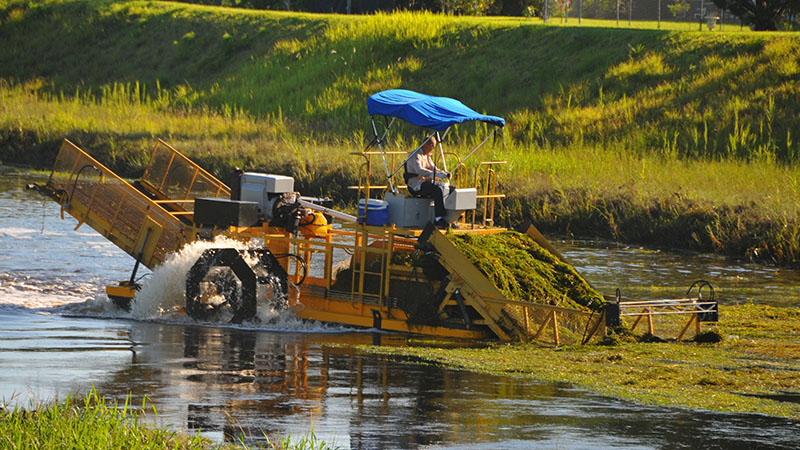
Screening systems like this one working to remove the invasive plant species Hydrilla from Lake Oswego in New York, can help ecosystems recover – they are expensive machinery to maintain and work primarily in large waterbodies. Photo by Kelly Donaldson/PA Sea Grant.
The Invasives Risk in the Mid-Atlantic
Aquatic invasive species pose a significant environmental and economic threat to the ecosystems and communities of the Mid-Atlantic region, and beyond.
Non-native or “exotic” species are plants, animals, or microbes that have been transported from one geographic region to an area where they did not live previously. The Chesapeake Bay watershed has become home to many non-native species — some innocuous, some beneficial, but others destructive beyond our expectations.
When a non-native species is introduced into a new habitat and the environment is free of natural competitors or controls, the species may grow and spread rapidly. When these species outcompete or prey upon native species, disrupt ecosystems, and reduce biodiversity, they are considered invasive.
Aquatic invasive species (AIS) live primarily in water. Once they are introduced to a water body, it is very difficult to control their spread or completely eradicate them. Therefore, preventing the introduction and spread of these species is the best line of defense.
The Mid-Atlantic region has become home to more than 200 known or possible invasive species.